
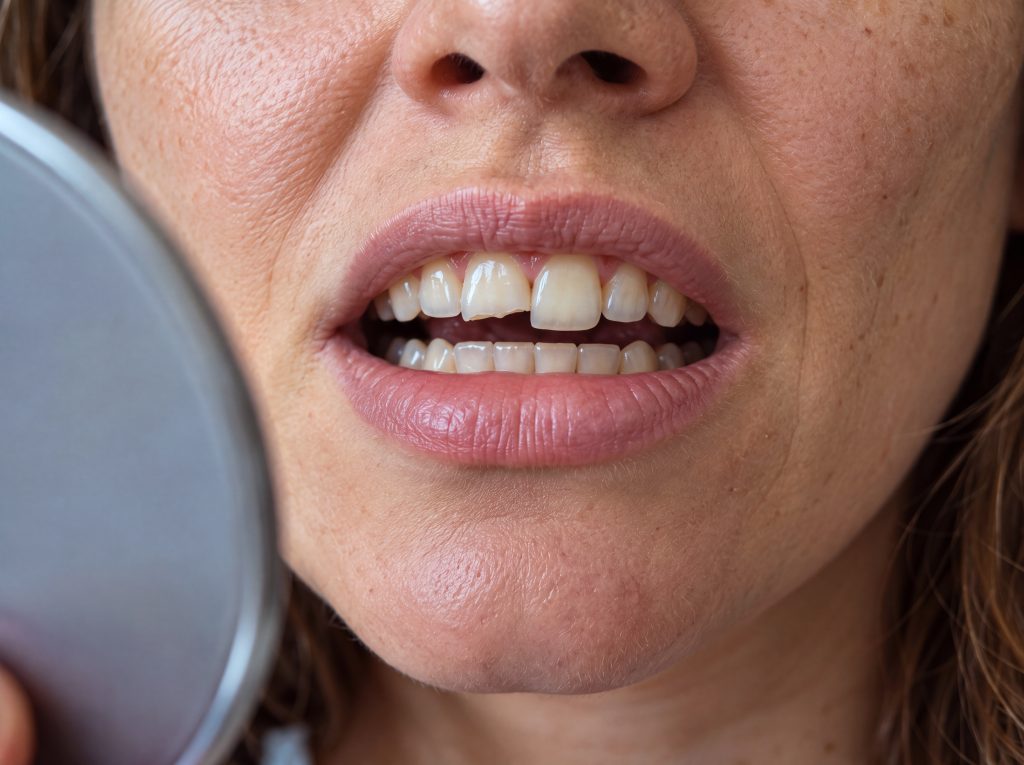
A chipped tooth can happen in an instant. Maybe you bit down on something hard, had a sports-related injury, or simply noticed a small piece of your tooth was missing one morning. If the chip doesn’t hurt, it can be tempting to ignore it and assume it’s nothing to worry about.
However, even a small chipped tooth can sometimes indicate a larger dental problem. Getting it evaluated by your dentist can help protect your tooth, prevent further damage, and keep your smile healthy.
What Causes a Chipped Tooth?
Teeth are strong, but they aren’t indestructible. A tooth can chip for a number of reasons, including:
- Biting down on hard foods, ice, or other objects
- Accidents or sports injuries
- Teeth grinding or clenching
- Weakened tooth enamel
- Large fillings that have weakened a tooth
- Tooth decay
- Normal wear and tear over time
Sometimes, a chip is caused by a straightforward injury. In other cases, it may be a sign that the tooth has already been weakened.
Why Is a Chipped Tooth a Problem?
You may think a tiny chip isn’t a big deal, particularly if you’re not experiencing any pain. But leaving a chipped tooth untreated can create additional problems.
1. The Damage Can Get Worse
A chipped tooth may be more vulnerable to additional cracking or breaking. The American Association of Endodontists recommends seeing a dentist as soon as possible after a chipped tooth to help prevent the damage from worsening.
What starts as a small chip could eventually become a larger fracture, potentially requiring more extensive dental treatment.
2. A Chipped Tooth Can Be More Sensitive
If a chip removes enough enamel to expose the underlying dentin, you may experience sensitivity when eating or drinking something hot, cold, sweet, or acidic.
Even if the tooth isn’t painful right away, new sensitivity is a reason to have it examined by a dental professional.
3. It May Make Your Tooth More Vulnerable to Decay
A damaged tooth can create areas where food particles and bacteria are more difficult to clean effectively. Depending on the location and extent of the damage, this can contribute to an increased risk of dental problems.
The American Dental Association notes that tooth decay is a progressive process that can lead to increasing destruction of tooth structure when not appropriately managed.
4. There Could Be a Crack You Can’t See
Not every dental fracture is obvious. A crack can sometimes be difficult to see, and some cracks may not even show up on an X-ray.
That’s one reason it’s important not to assume that a small chip is harmless. Your dentist can examine the tooth and determine whether there is additional damage.
5. It Can Affect Your Smile
Even a small chip on a front tooth can change the appearance of your smile. Depending on the location and size of the chip, cosmetic dental treatment may be able to restore the tooth’s shape and appearance.
What Should You Do If You Chip a Tooth?
If you chip a tooth, try to schedule a dental appointment as soon as reasonably possible. In the meantime:
Save the piece of tooth if you can. If a larger piece broke off, keep it and bring it to your dental appointment.
Avoid chewing on that side of your mouth. This can help prevent additional damage.
Stay away from very hard foods. Choose softer foods until your dentist has evaluated the tooth.
Keep the area clean. Continue brushing and flossing carefully around the affected tooth.
Contact your dentist if you develop pain or sensitivity. Increasing pain, swelling, or significant sensitivity should not be ignored.
How Is a Chipped Tooth Treated?
Treatment depends on how much of the tooth has been damaged and whether the tooth has an underlying crack, decay, or other problem.
For a small chip, your dentist may recommend dental bonding, which can restore the shape of the tooth using a tooth-colored material.
For a larger area of damage, a filling or dental crown may be appropriate. The American Association of Endodontists notes that chipped teeth can often be repaired by reattaching the broken piece, bonding, or placing a crown, depending on the situation.
If the damage extends deeper into the tooth and affects the pulp, additional treatment may be necessary. Your dentist will evaluate the tooth and recommend the treatment that best fits its condition.
When Is a Chipped Tooth a Dental Emergency?
Not every chipped tooth requires emergency treatment. However, you should contact a dentist promptly if the chip is accompanied by:
- Significant or worsening pain
- Severe sensitivity
- Bleeding that doesn’t stop
- Swelling around the tooth
- A large portion of the tooth breaking off
- A sharp edge cutting your tongue or cheek
- A tooth that has become loose
- An injury involving your face or jaw
A dental professional can determine how serious the injury is and whether immediate treatment is necessary.
Don’t Wait Until a Chipped Tooth Hurts
One of the biggest mistakes you can make with a chipped tooth is assuming that no pain means no problem. Some dental damage can exist without noticeable symptoms, and addressing a problem early may help prevent it from becoming more complicated.
If you’ve recently chipped a tooth, don’t wait for it to get worse before having it checked. A dental examination can determine the extent of the damage and help you understand your treatment options.
Have a chipped or damaged tooth? Contact Legacy Dental of PA to schedule an appointment and get your smile back on track.